RECAP:
Double Trouble
September 27-28, 2025
Chicago, IL
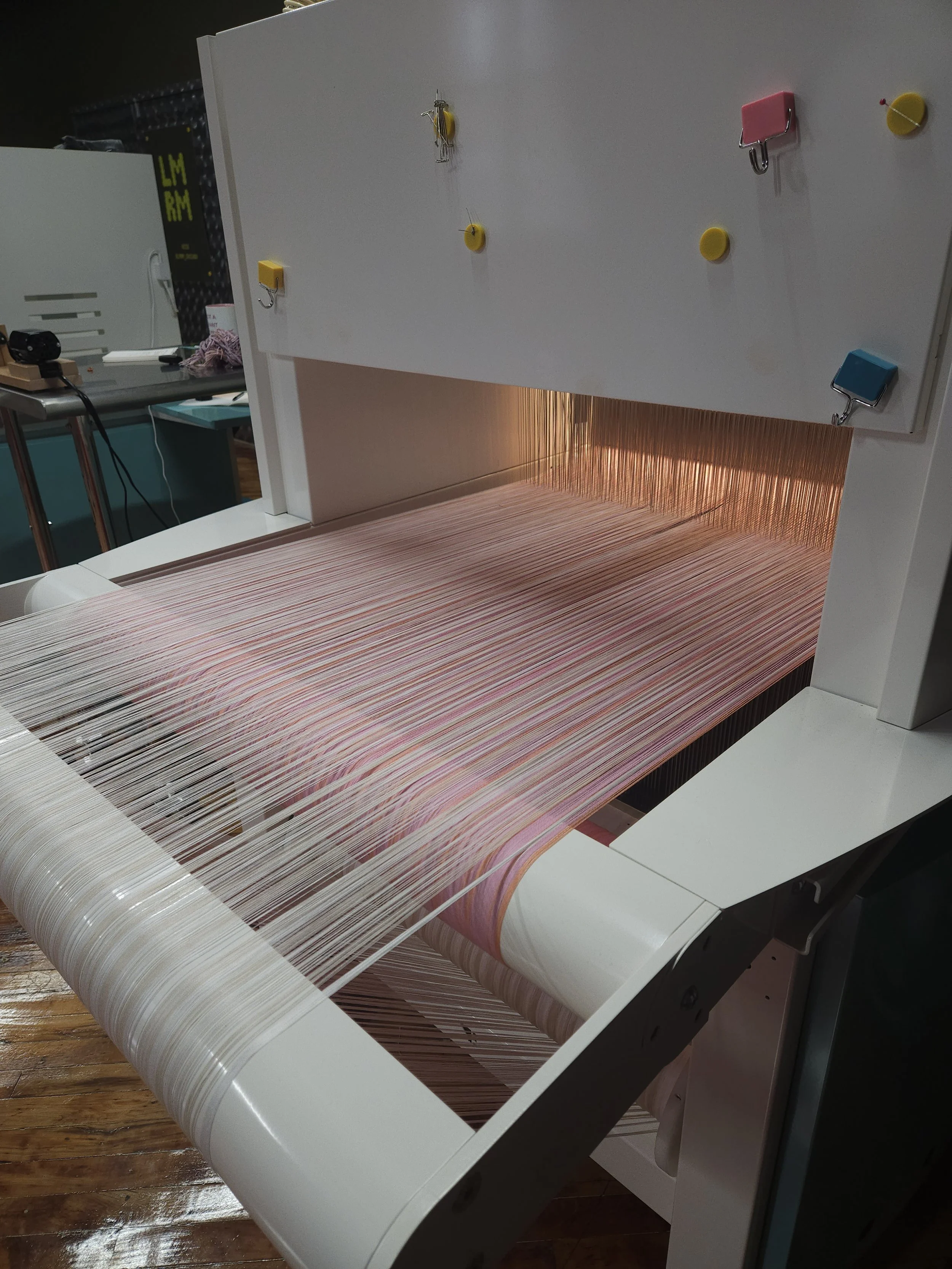
LMRM was thrilled to invite Kendall Schauder and Emily Winter of The Weaving Mill to design an experimental warp for our September warp cycle on our 2W TC2 loom.
As part of our experimental warp cycles, LMRM partners with artists in the field to lead workshops that serve as a wider proposal to our weavers: how can we collectively explore new ways of designing at the loom?
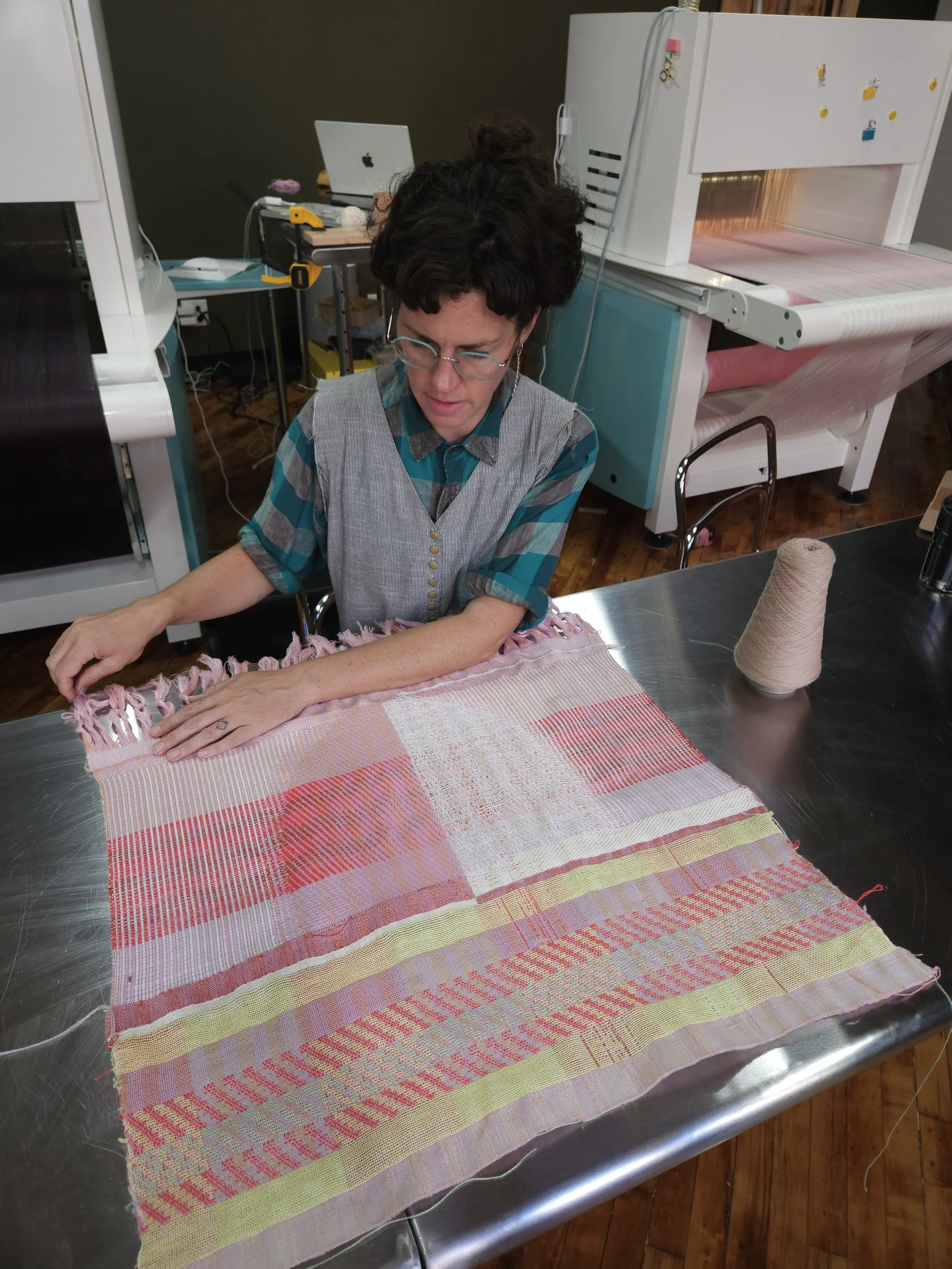
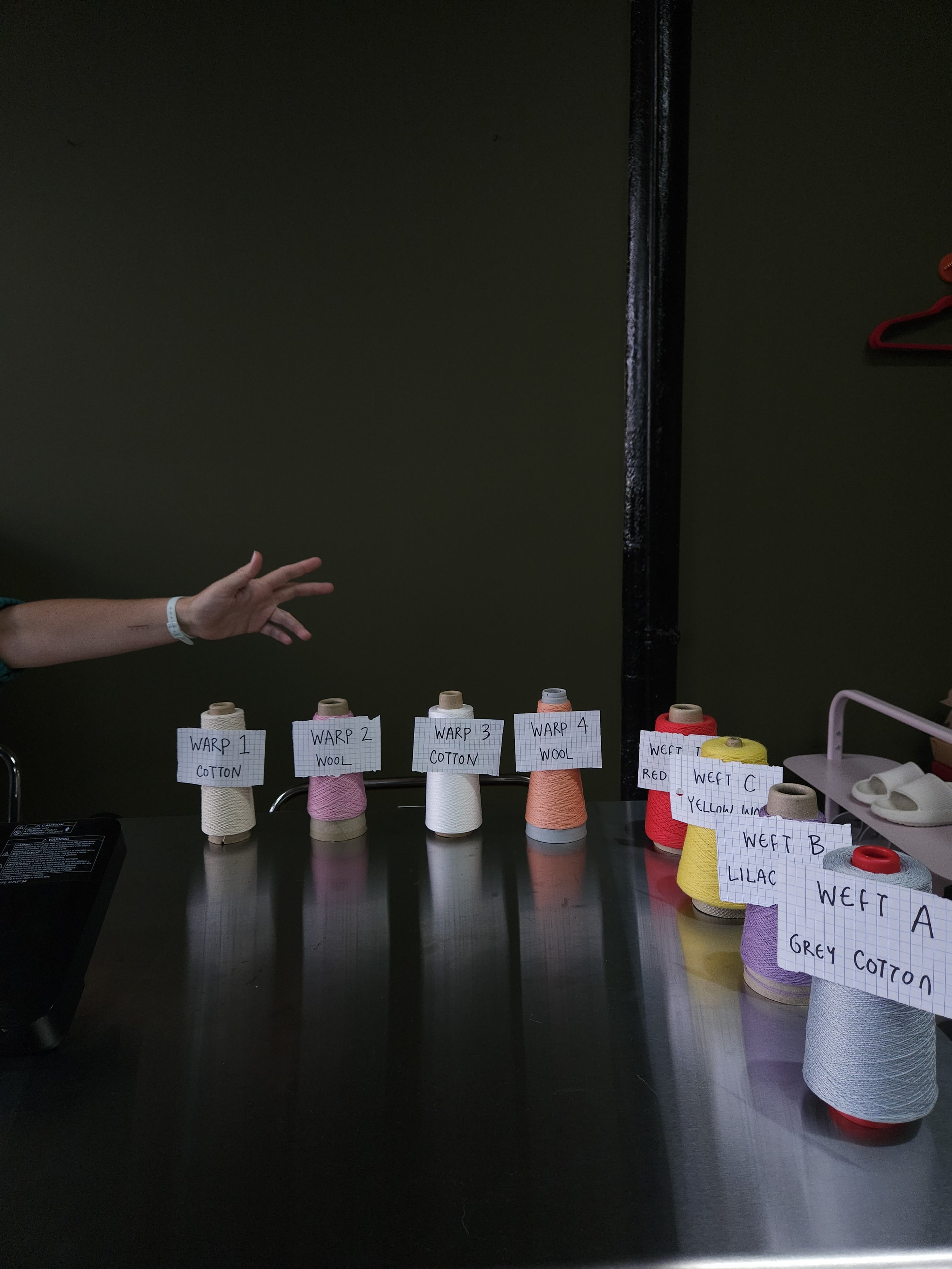
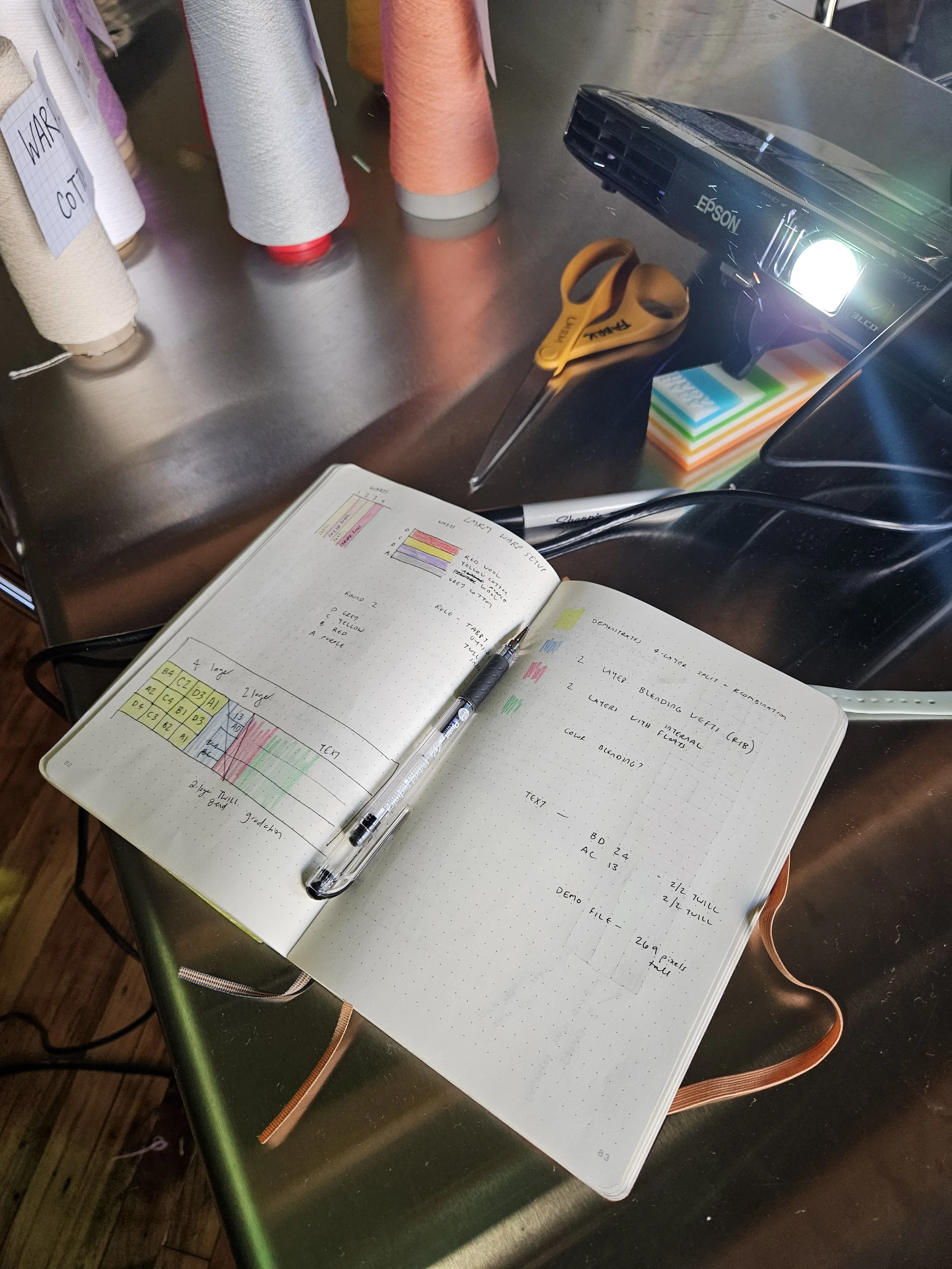
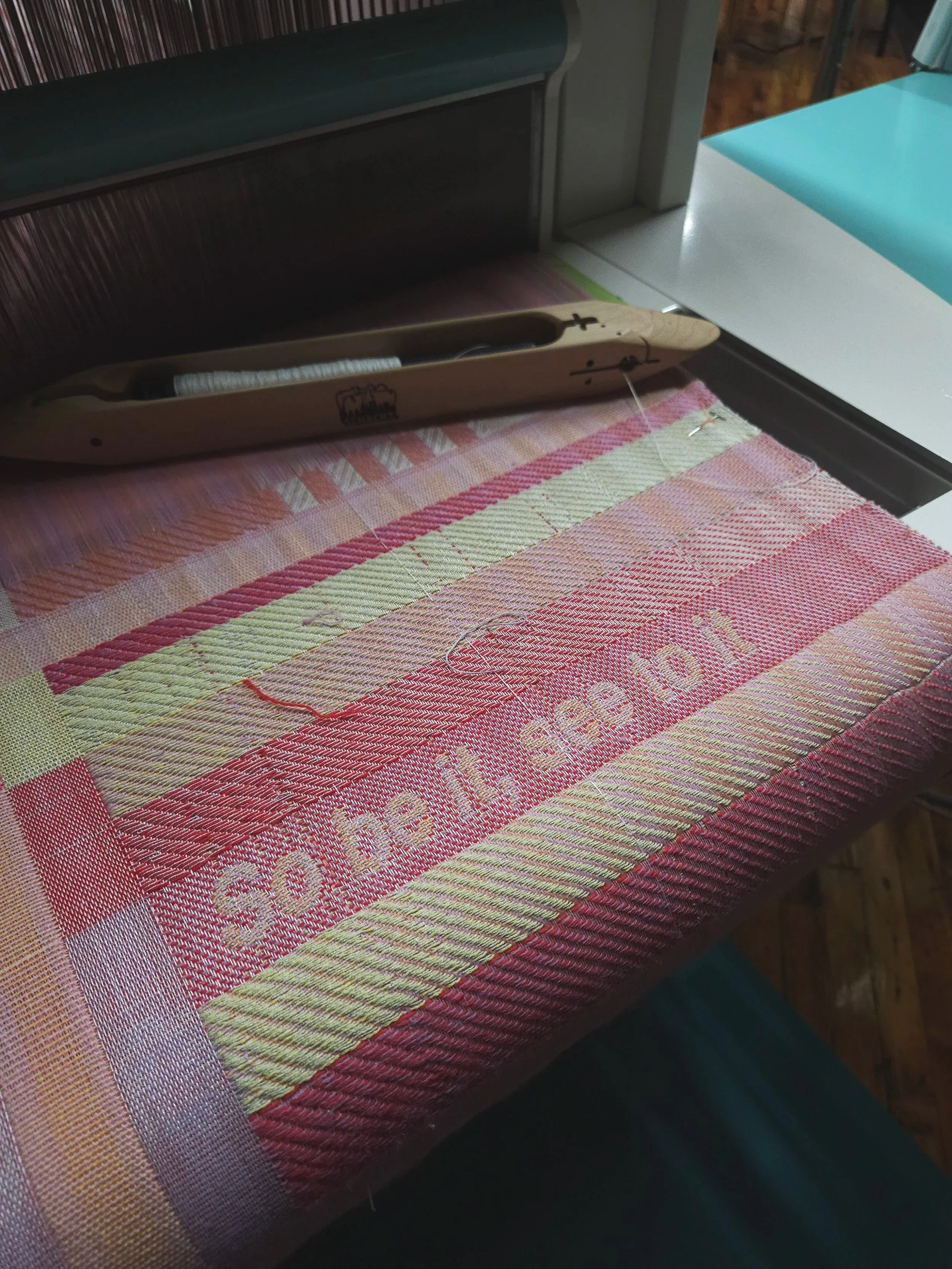
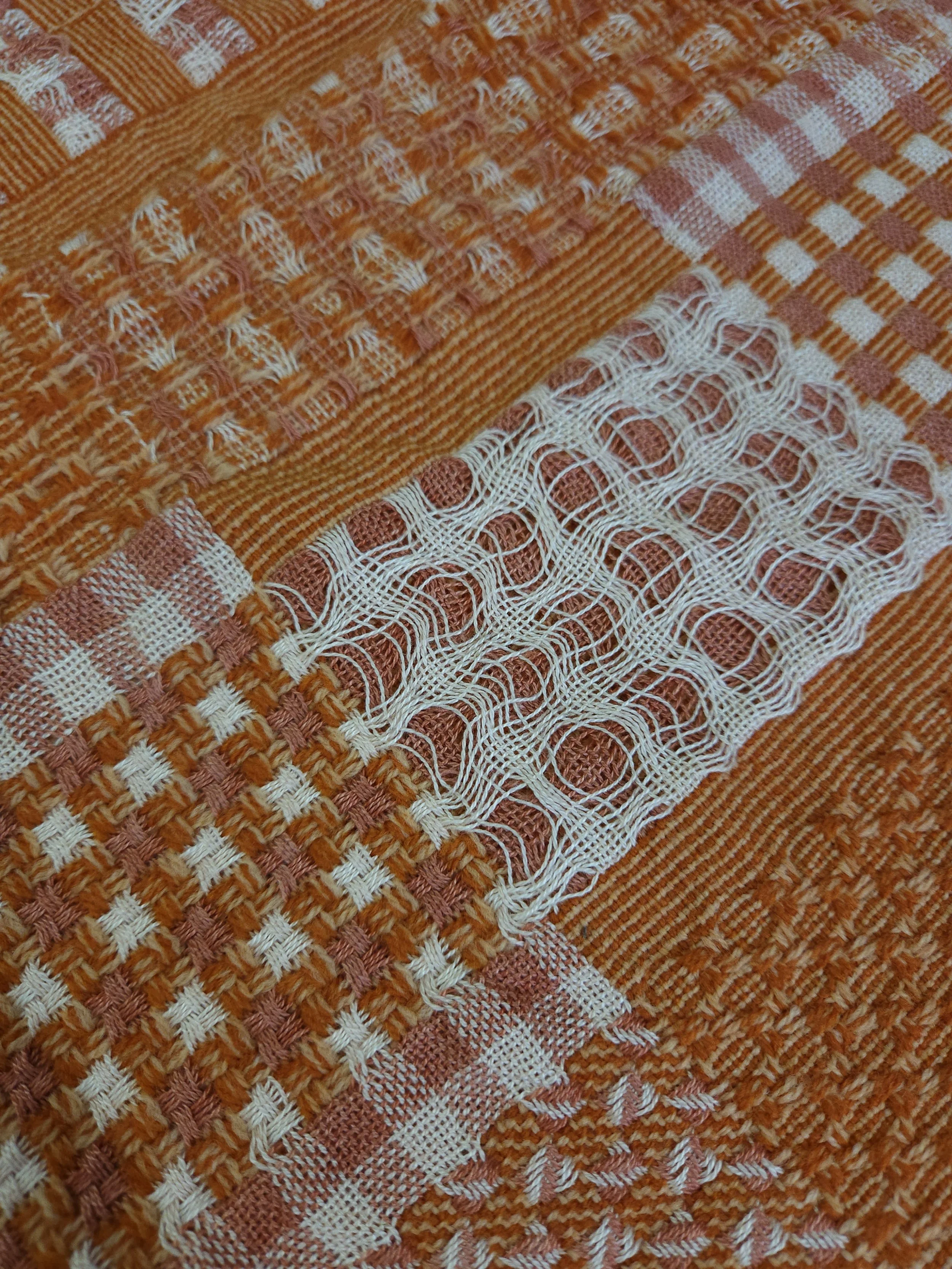
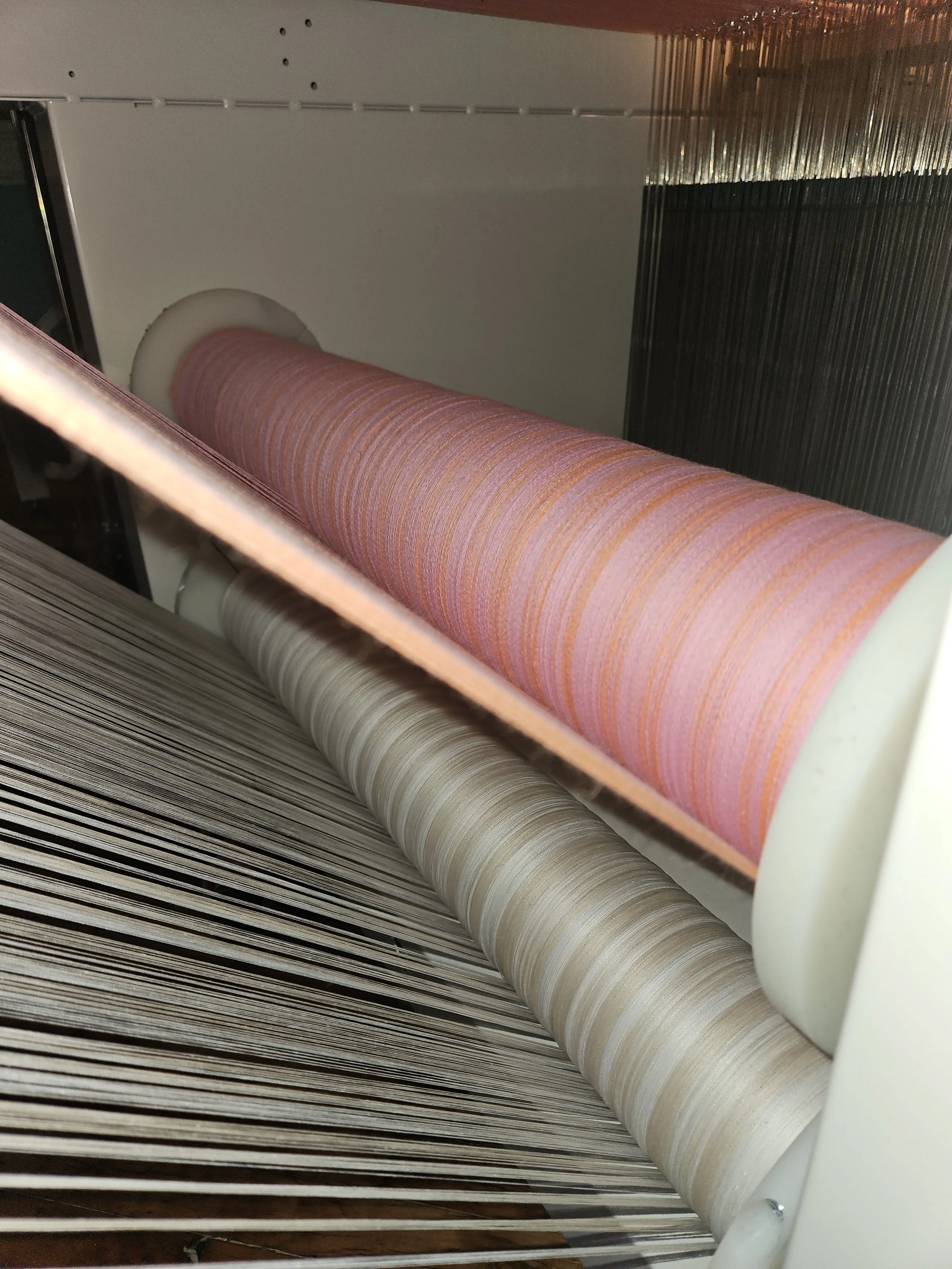
Attendees recieved guided instruction from Kendall and Emily to learn the basics of building a doubleweave file for the TC2, and then expand their doubleweave drafting toolkits with the introduction of AdaCAD’s Layer Notation operation. Working on a striped warp featuring two distinct color and material systems, students will have the opportunity to play with both graphic and textural plaids. The contrast between a wool warp on the first beam and a cotton warp on the second will encourage play with the possibilities of differential shrinkage and surface quality.
In addition, Etta Sandry and Deanna Gelosi of the AdaCAD team joined us for the weekend to present a workshop on navigating the tool and support other workshop attendees of the weekend in exploring its interface.
Check out our recap below!

-
Kendall Schauder is a textile artist and weaving instructor based in Chicago. She is assistant director at The Weaving Mill, an artist-run industrial weaving studio. She also works as a weaver/designer at the Passementerie Mill, and teaches at The Chicago Weaving School. She holds a Bachelors of Fine Arts from the School of the Art Institute of Chicago. In her studio work Kendall uses textiles as a language to reflect on the absurdity of a standardized world in contrast with the various ways humans learn, communicate and connect.
-
Emily Winter a weaver, writer and teacher based in Chicago. She is co-founder and director of The Weaving Mill, an artist-run industrial weaving studio that blends design, production, research, education and community programming. Her studio work bridges functional design, material and historical research and formal explorations of color, construction and architecture through weaving. Her research and projects have received support from the Center for Craft, the Design Museum of Chicago, and DCASE among others. She holds an MFA in Textiles from the Rhode Island School of Design and a BA in History from the University of Chicago and currently teaches in Fiber & Material Studies at the School of the Art Institute of Chicago.
IG: @emmsplinter
-
The Unstable Design Lab is a research lab housed within the ATLAS Institute at the University of Colorado Boulder. It was founded in 2017 by Laura Devendorf and is currently directed by Laura Devendorf and Steven Frost. Etta Sandry and Deanna Gelosi, current PhD students in the lab, joined us to present an introduction on AdaCAD, one of the Unstable Design Lab’s projects.
AdaCAD is an experimental workspace that applies parametric design to the domain of weave drafting. It supports algorithmic and playful approaches to developing woven structures and cloth, for shaft, dobby, and jacquard looms.
AdaCAD is freely accessible and open source online at adacad.org.
Saturday
September 27
1 - 4 pm
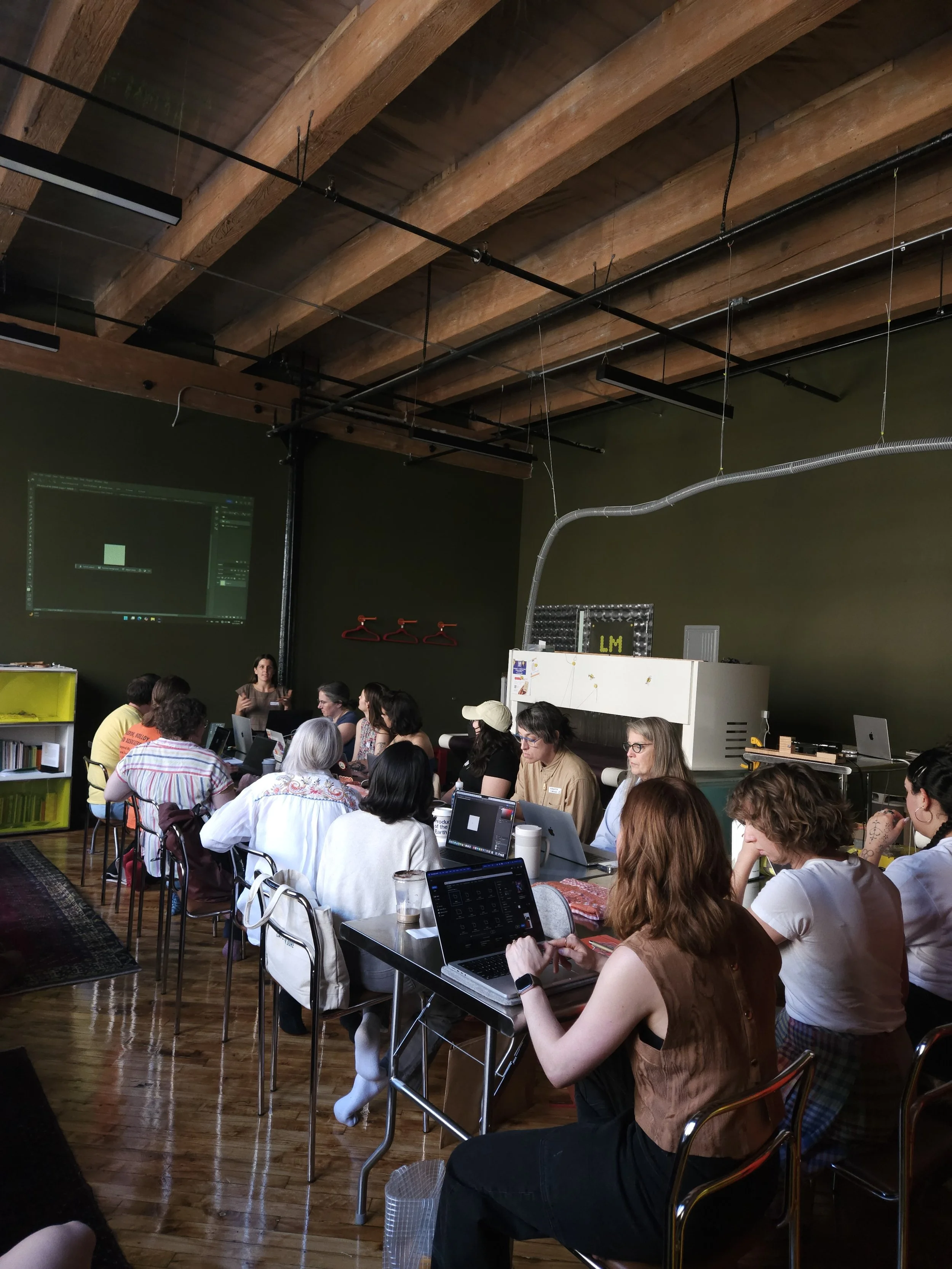
Double Trouble: Intro to Drafting Doubleweave in Photoshop
led by Kendall Schauder
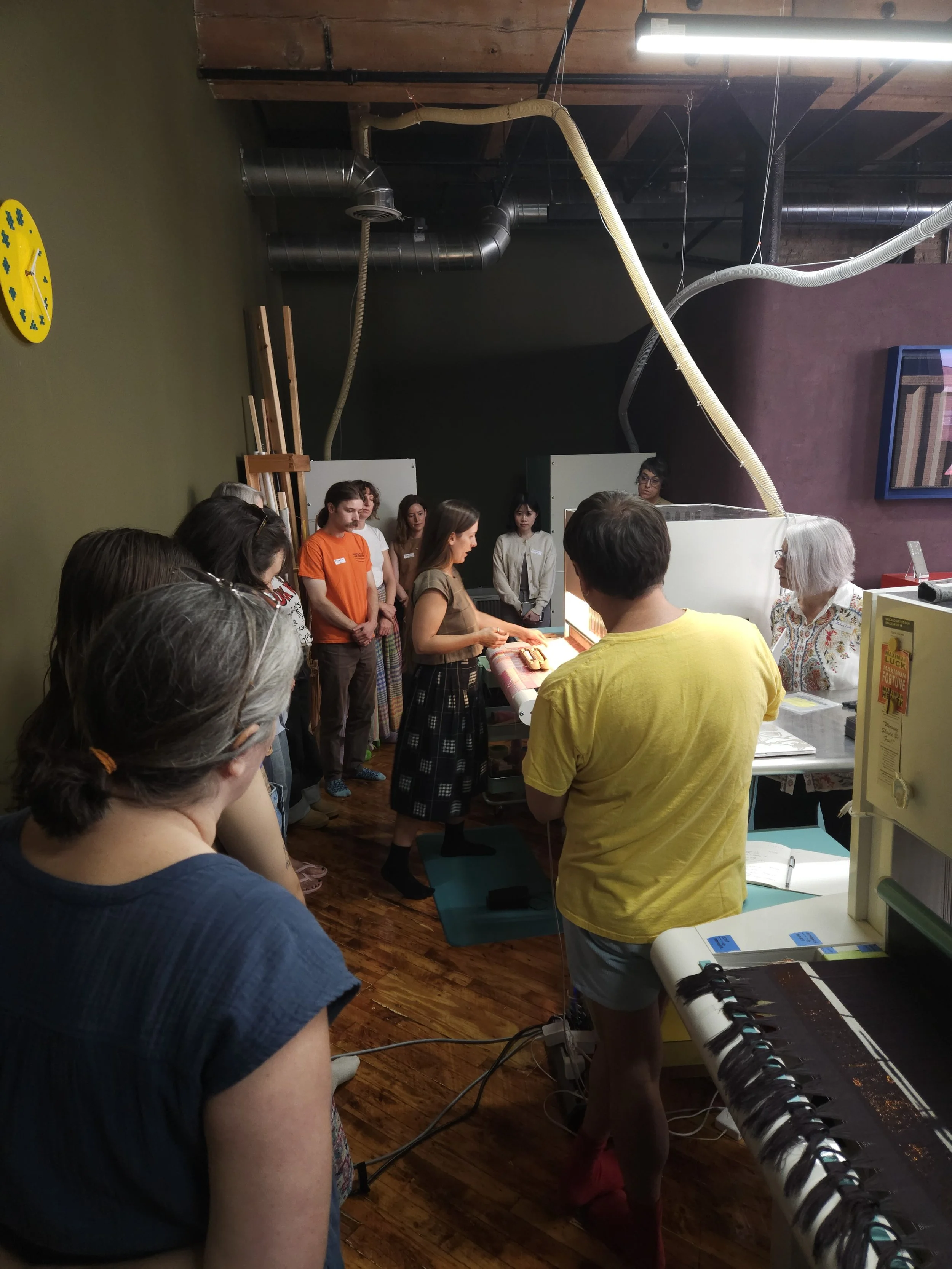
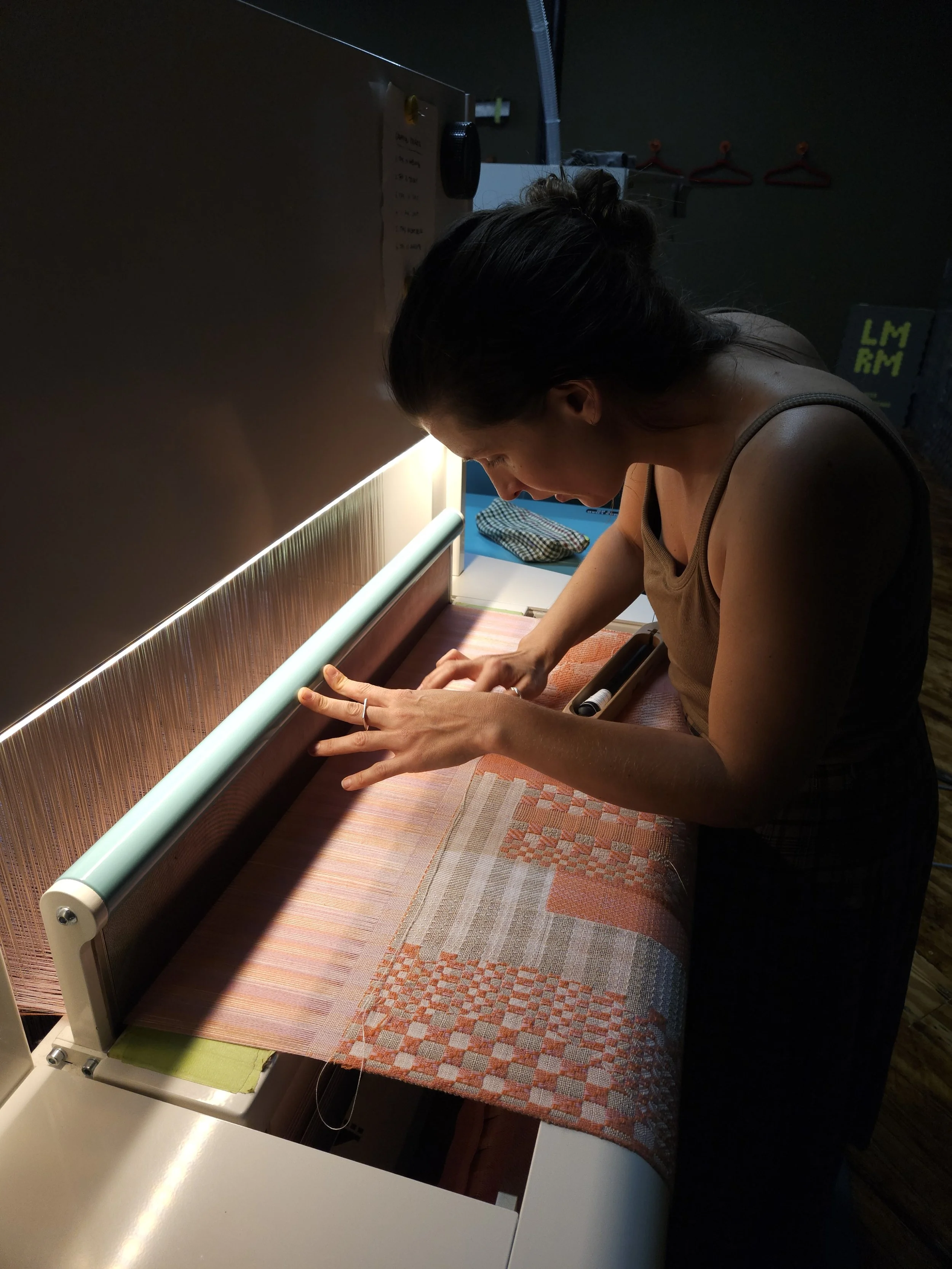
In the first installment of Double Trouble, students learned the basics of building a doubleweave file for the TC2, developing weave structures for two separate cloths and playing with different strategies for bringing those cloths together through layer exchange and draft manipulation. Shifting the focus from image-making to draft and weave structure development, Kendall applied drafting logic from the floor loom to the digital weaving context.
Students received an initial Photoshop pattern library and structural templates to develop their own doubleweave files to test at the loom the next day.
Saturday
September 27
5 pm
AdaCAD Introduction
led by Etta Sandry and Deanna Gelosi
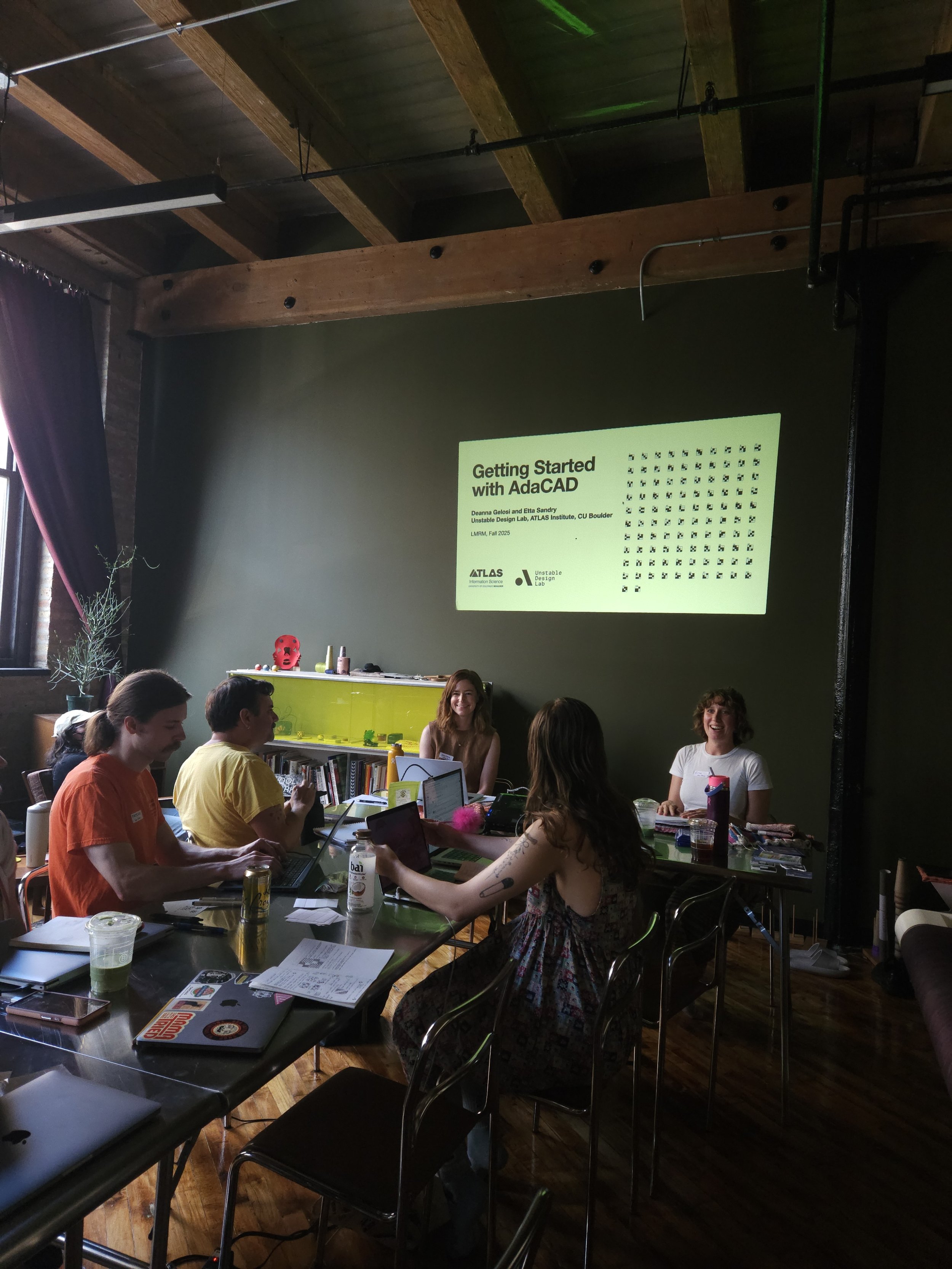
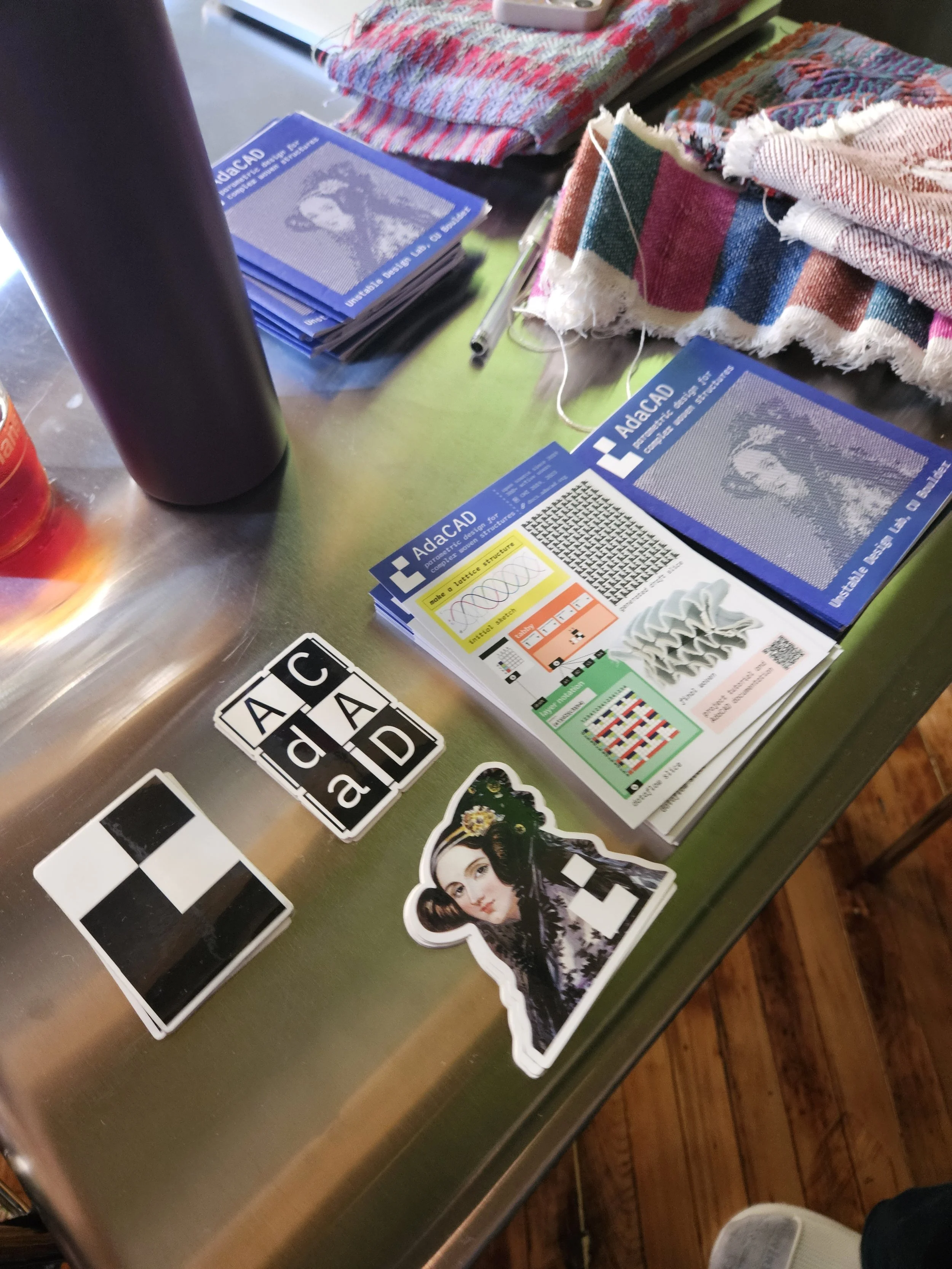
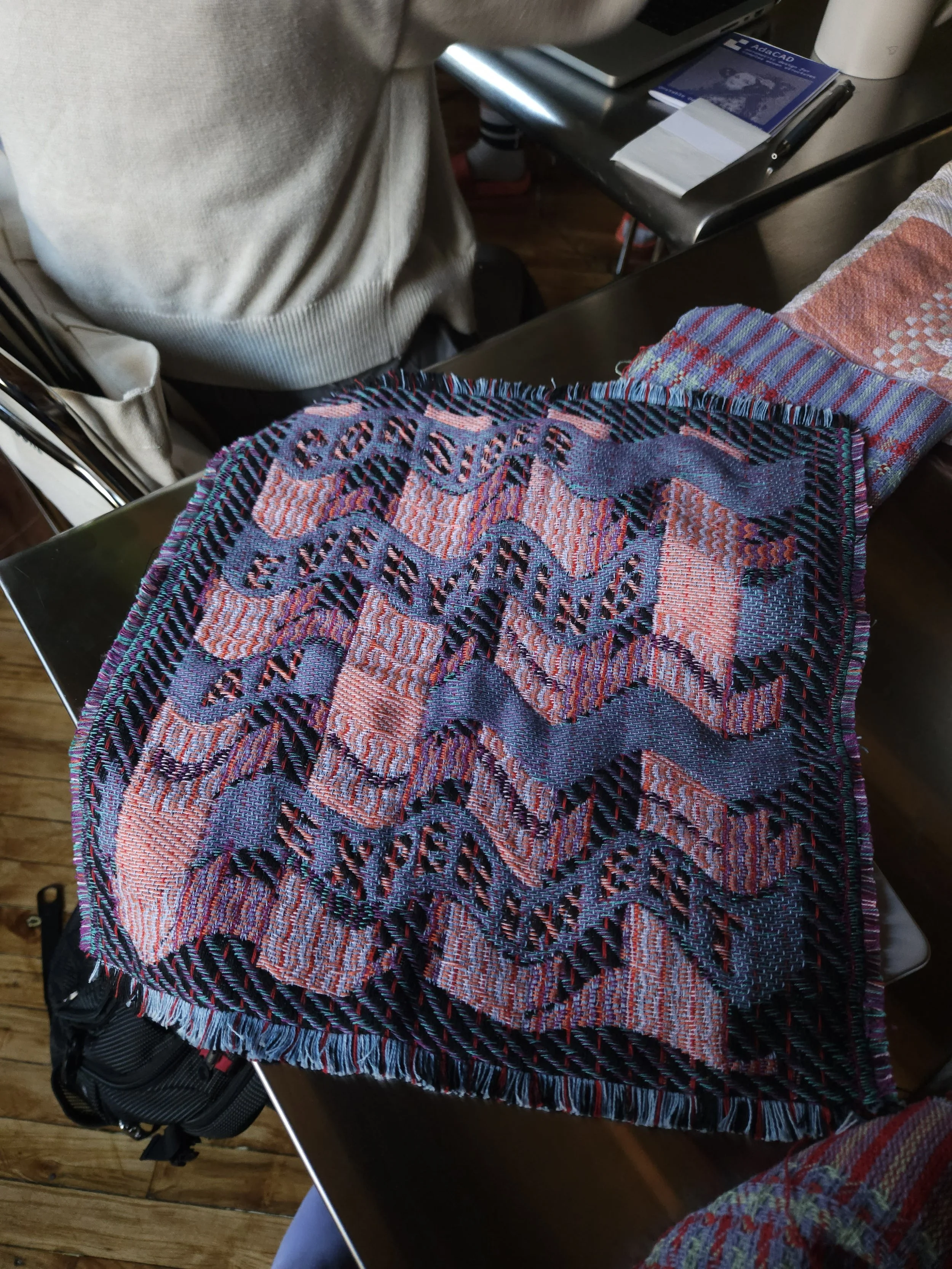
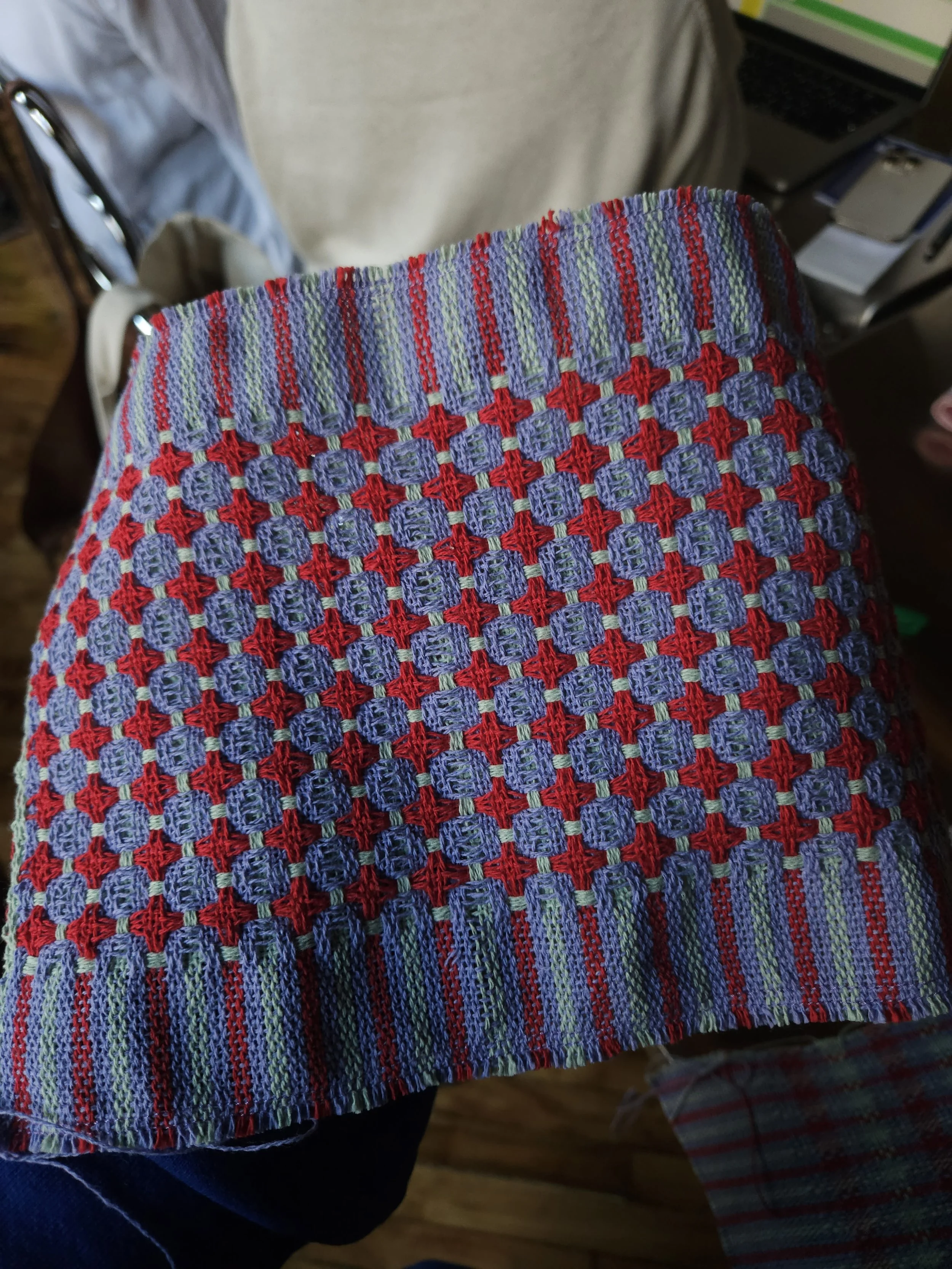
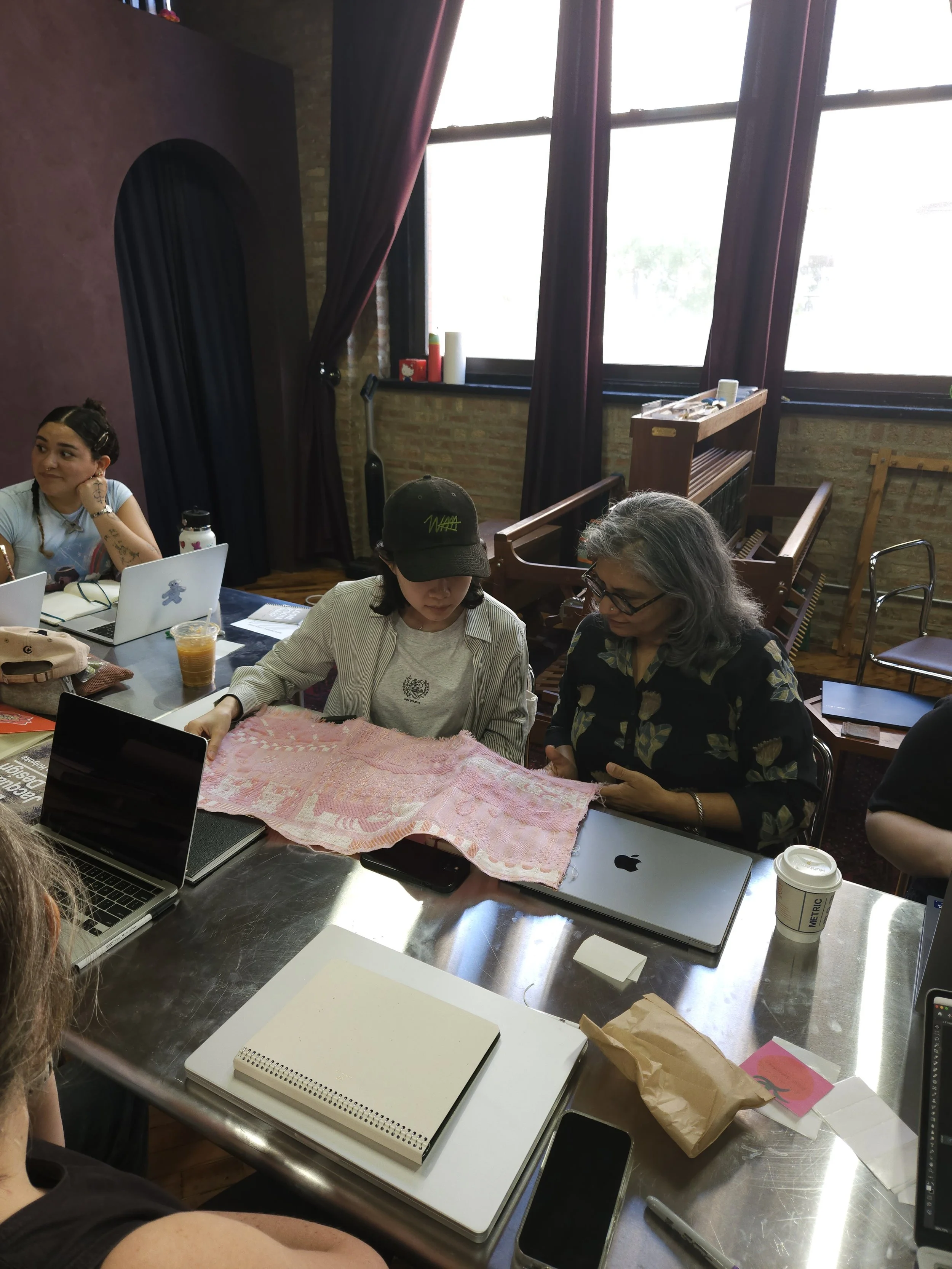
Etta and Deanna joined us from the University of Colorado Boulder to present an introduction on AdaCAD and its features, giving workshop attendees a preview of how to navigate the tool ahead of Emily’s workshop the next day. They passed around various woven samples designed through AdaCAD and zines. Together, they looked closely at features and answered questions with other workshop attendees throughout the weekend.
Due to the support of the NSF Pathways to Enable Open-Source Ecosystems Grant, Unstable Design Lab visited makerspaces and universities during the fall of 2025 to connect with experimental weavers and share the possibilities of parametric design. LMRM thanks Unstable Design Lab for including our studio as one of their destinations for the AdaCAD team.
Sunday
September 28
10 - 1 pm
Open Weaving Time
led by LMRM staff
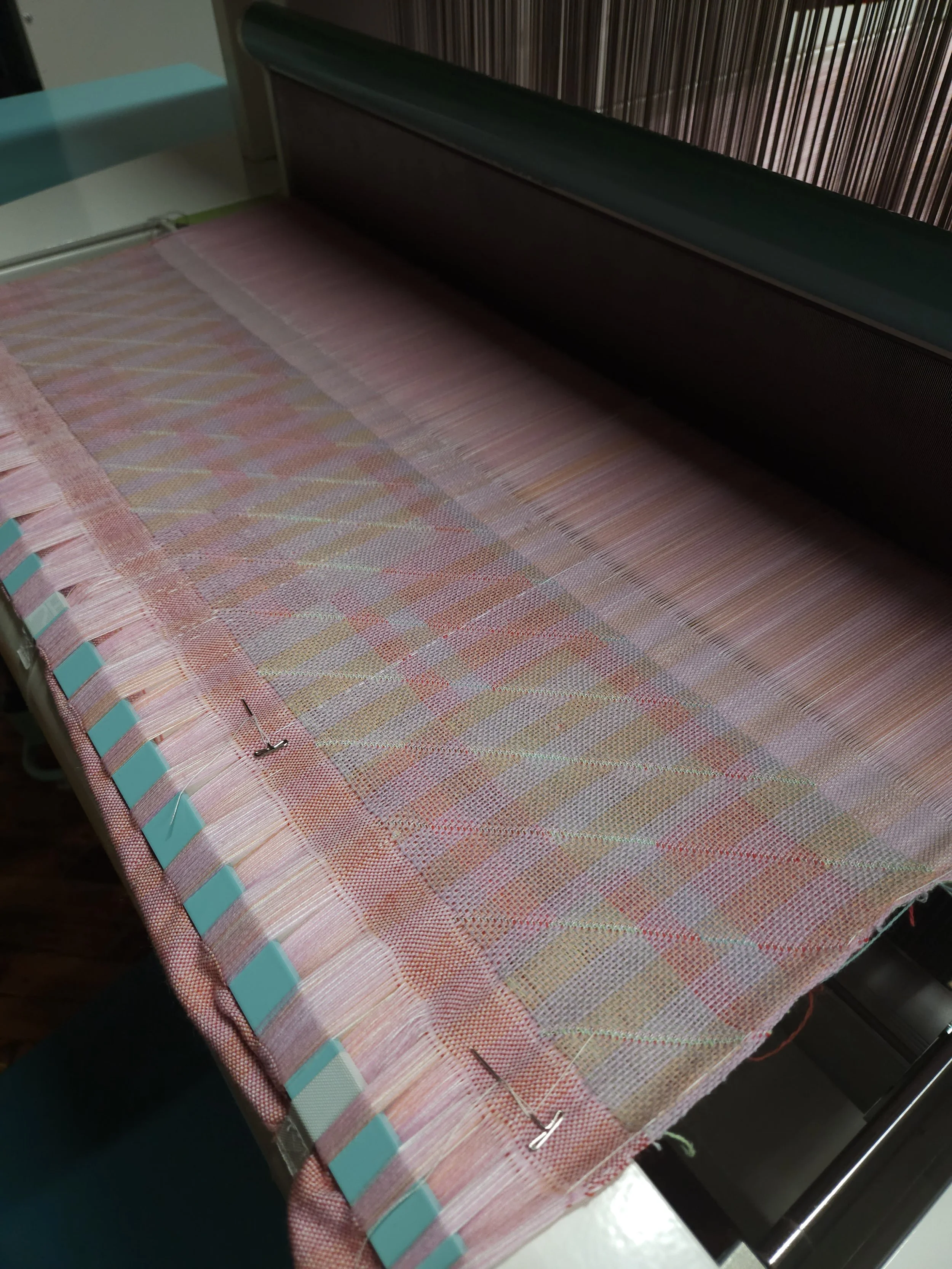
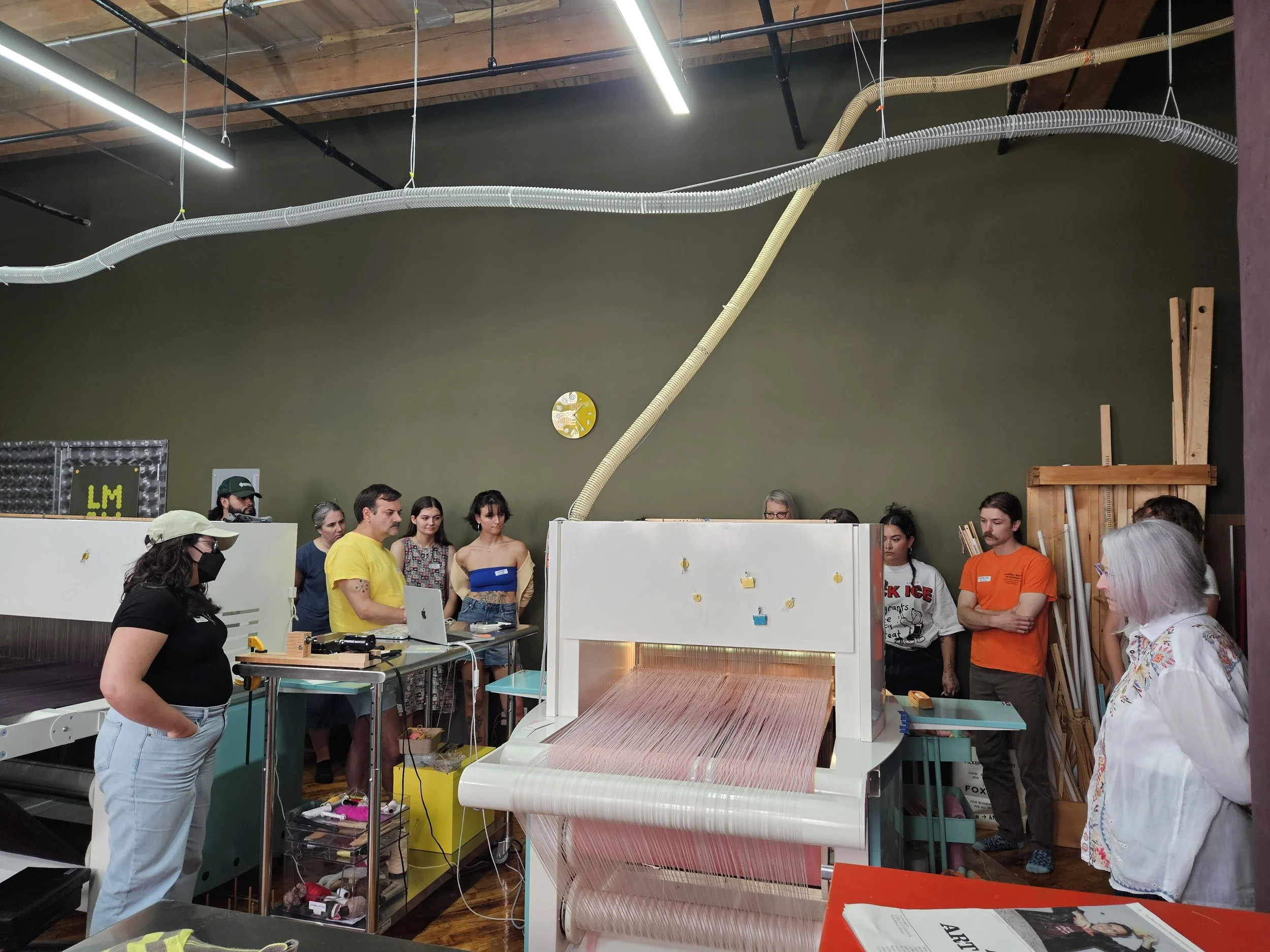
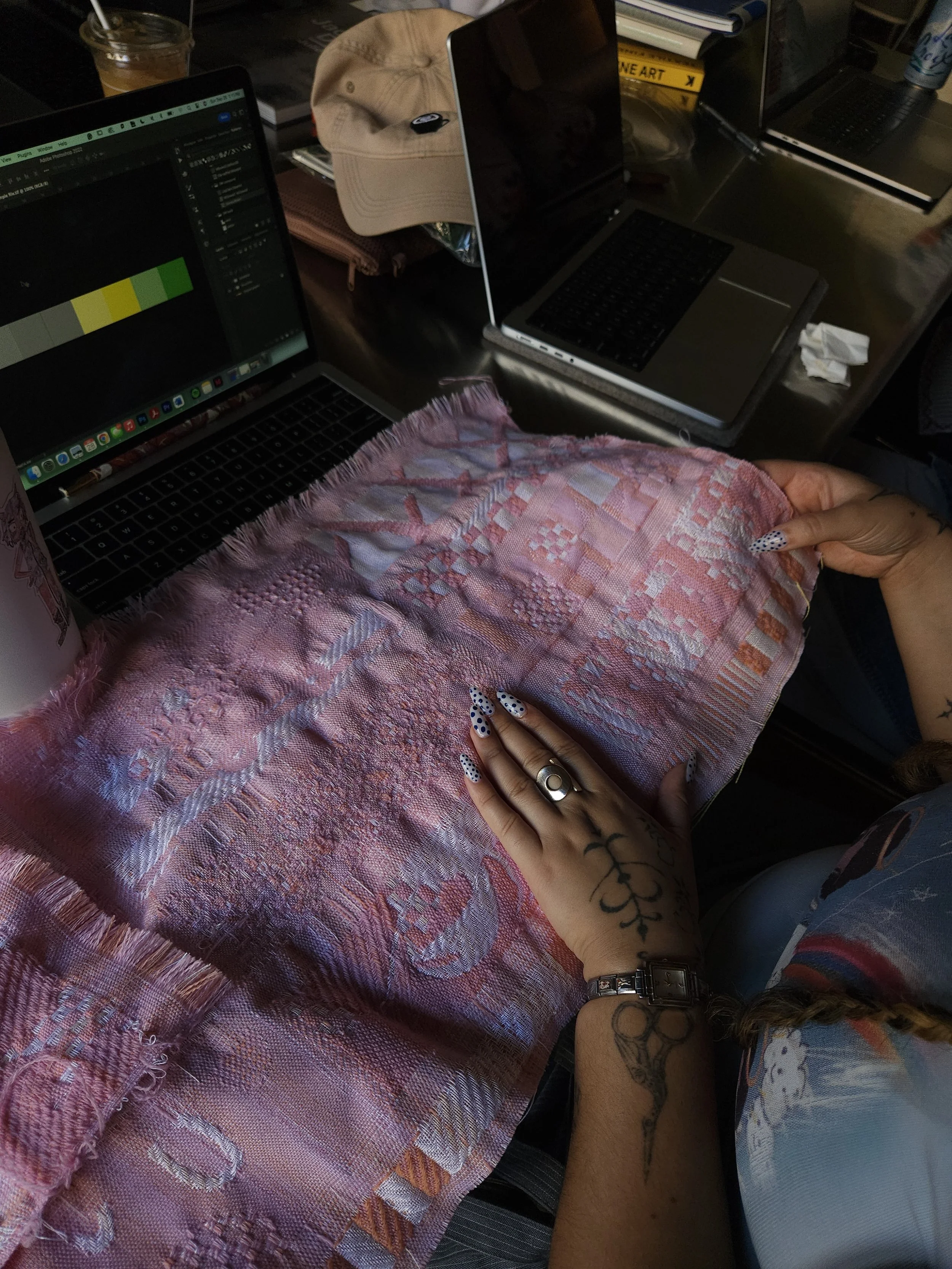
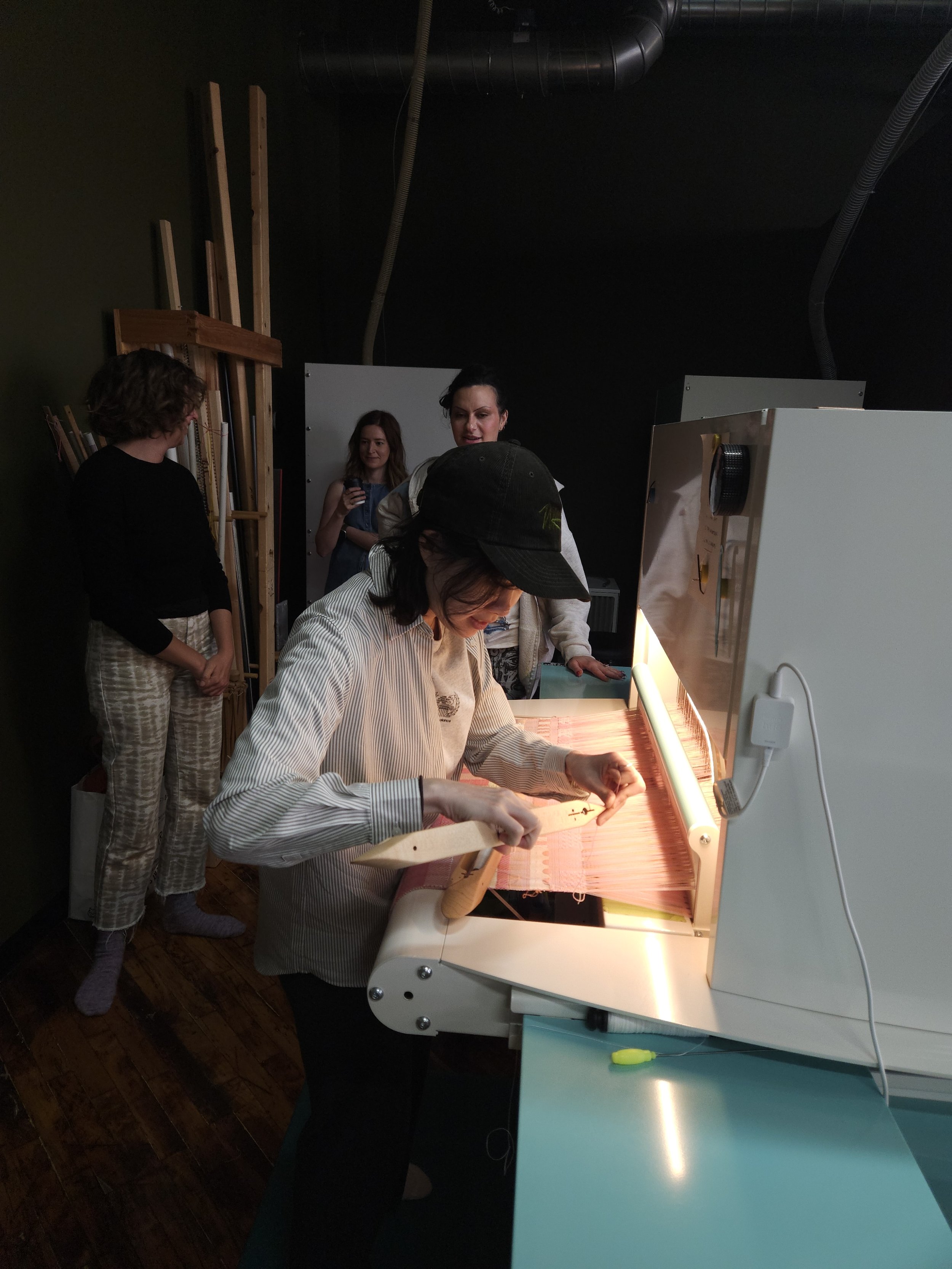
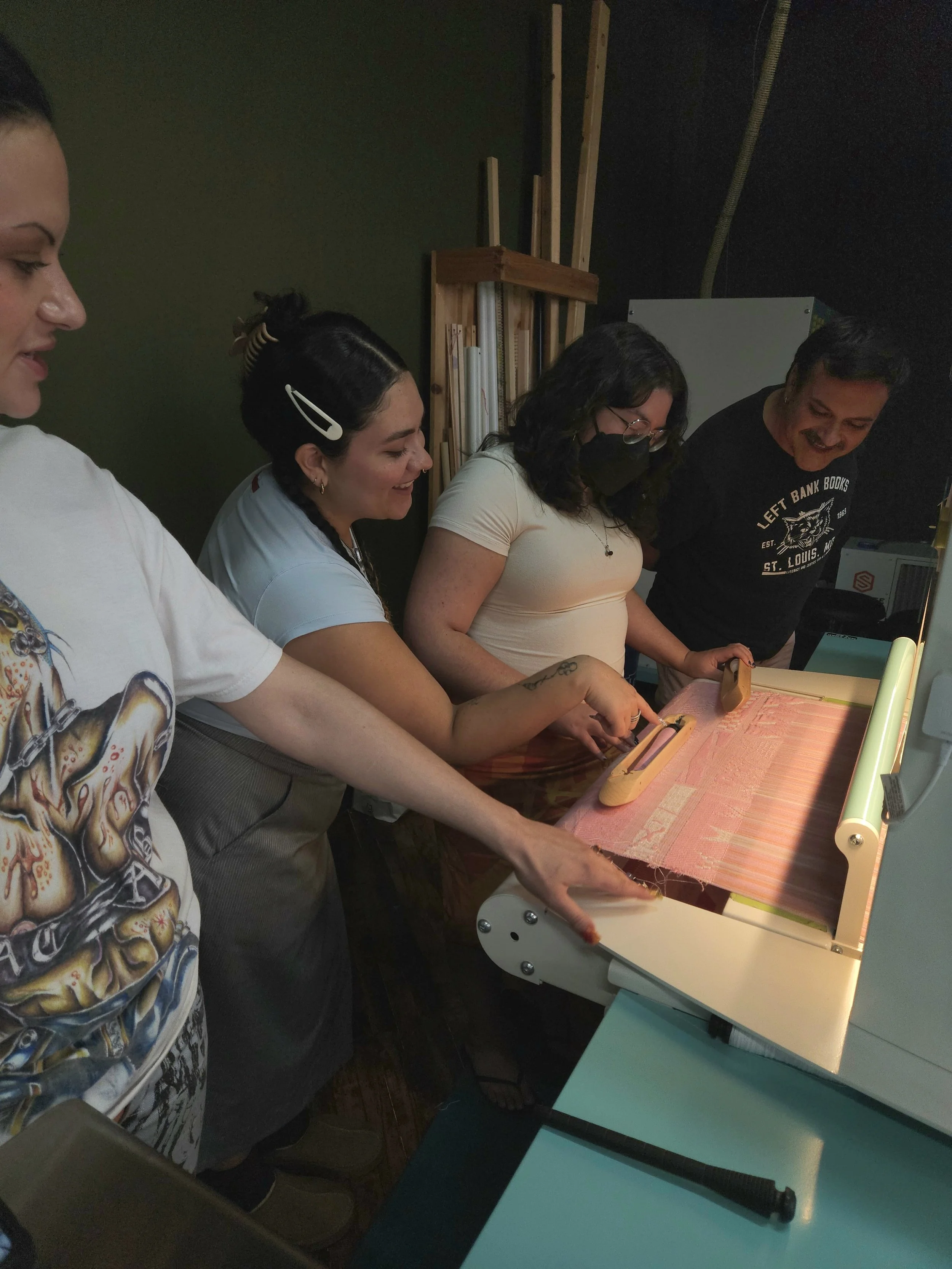
Registrations for both workshops included group weaving time slots for attendees to familiarize themselves with the TC2 looms, get authorized for independent rentals, and to test weave a small sample file designed using tools presented from Saturday’s workshop. Attendees were invited to design their own file and drop it in a shared folder by Sunday morning for LMRM to combine into a composite file. They signed up for 10 minute weaving slots as each attendee wove a portion of the composite file of everyone’s samples.
LMRM staff then cut these weavings off the loom shortly before the beginning of Workshop 2 so that attendees could take their samples home for study.
Sunday
September 28
1 - 4 pm
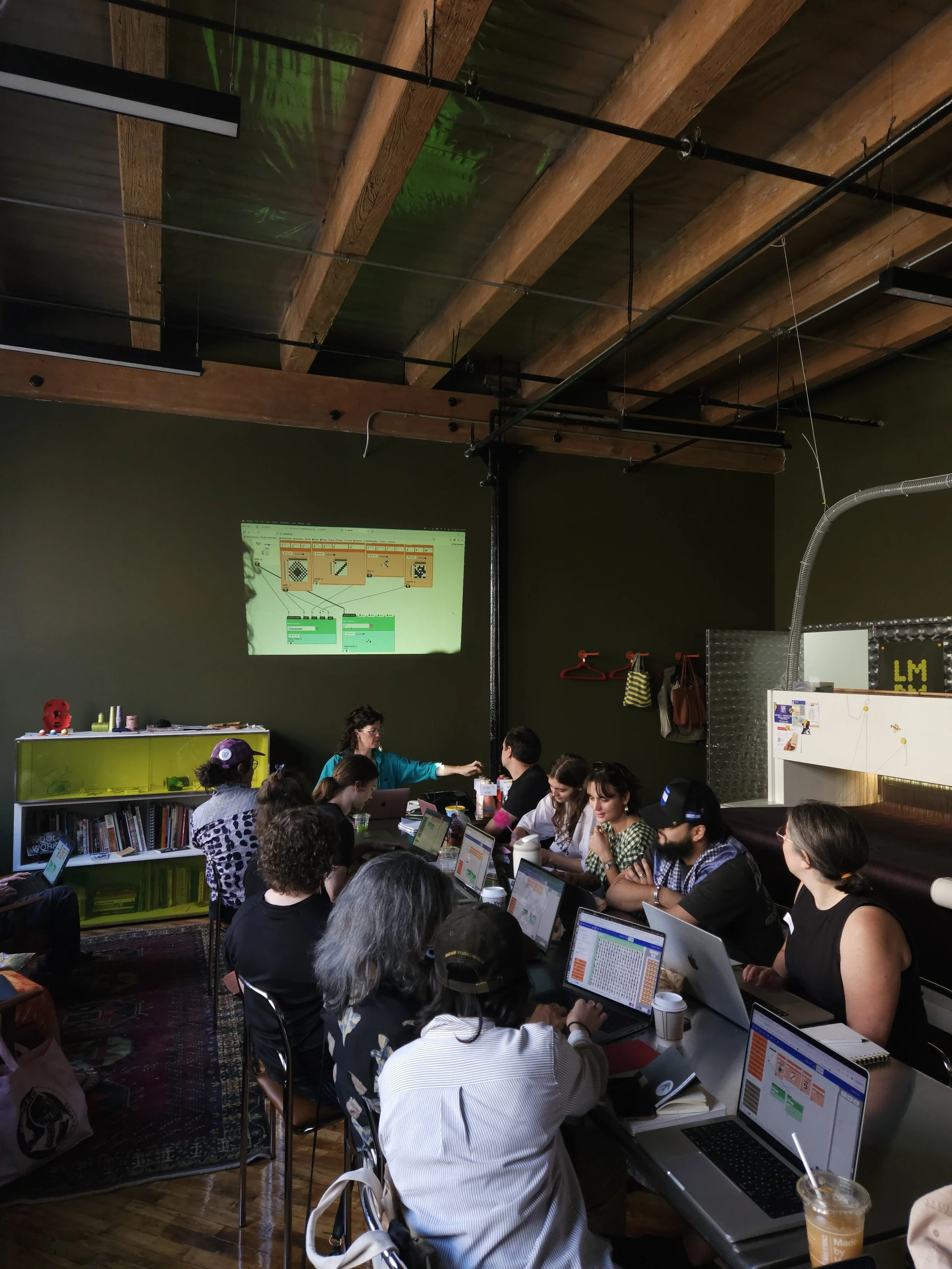
Double Trouble: Expanded approaches to Drafting Doubleweave
led by Emily Winter
In the second installment of Double Trouble, students expanded their doubleweave drafting toolkits with the introduction of AdaCAD’s Layer Notation operation. AdaCAD, an open-source web-based weaving workspace, applies parametric design principles to the development of weave structure and offers a unique approach to organizing warp and weft systems. Working between Photoshop and AdaCAD, Emily demonstrated her system for creating complex weave structures in AdaCAD and how she uses those patterns in her overall design process in Photoshop. Additionally, she also showed attendees how she uses different masking layers to simulate warp and weft interactions. Students explored new strategies for building and combining structure and graphic while playing with material combination and structural permutation.